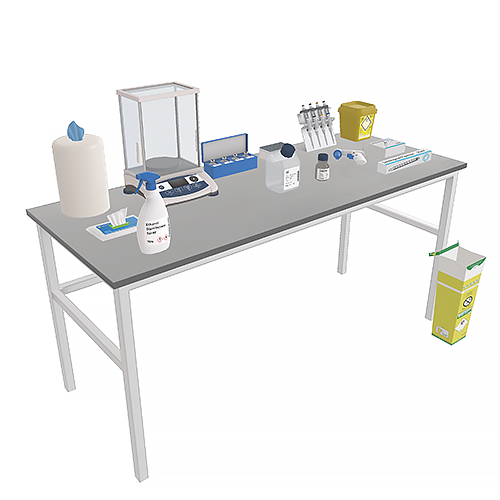
Laboratory induction training and assessment are essential components of initial lab orientation. It is vital that new personnel understand good laboratory practice, basic health and safety, how to produce reliable and accurate results and how to handle instruments correctly. This not only ensures that technicians, supervisors, and managers can trust the data produced, but also that staff are working professionally, without compromising the performance or safety of other laboratory personnel. Given that new staff will often operate key and expensive apparatus, correct and efficient operation is critical.
However, operator training within a physical lab is time, staff, and resource-intensive. Moreover, this is particularly true in environments where the primary objectives are to produce research, generate data, and support manufacturing. This is where Eclipse Creator fills a vital gap, offering an alternative or supplement to initial lab training before skills and knowledge are applied in a higher-stakes laboratory setting.
Virtual Simulation lab training
This collection of virtual protocols showcases acts as a simulation to the type of lab training new users can expect to undertake. In addition it provides instructors with a solid foundation for developing content specific to their training requirements and lab operations.
*You will need a valid license and access to the EC desktop application to import this file. For information on how to get an app license, contact us here.
Learning Objectives
Practice creating an antibody dilution series.
Learn best practices when weighing both liquids and solids for making solutions e.g. buffers.
Understand the fundamentals of handling hazardous chemicals.
As an example of an assessed laboratory procedure, trainees should be able to correctly assemble, clean and operate a centrifuge.
Safely and accurately perform a manual cell count using a Haemocytometer and Digital Microscope.