Health & Safety 

TYPE

Good Laboratory Practice and Health & Safety

LEVEL

University, Apprenticeship, College, Early Career

EQUIPMENT

General Laboratory Equipment

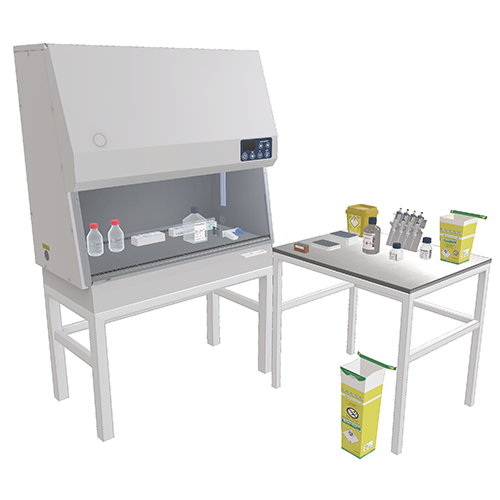
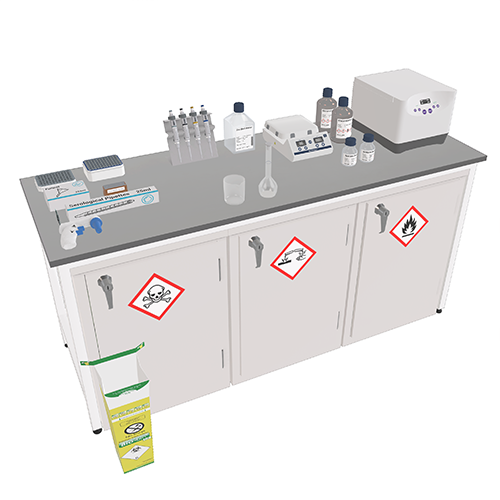
The protocols give users a virtual experience of lab safety training, fundamental to chemical handling and hazard perception. Thus, before any hands-on practice, learners will be familiar with key lab health & safety concepts, including:
 
  • The meaning of chemical hazard symbols
  • Correct handling, storage, and disposal of chemicals
  • Risks associated with specific instruments and processes
  • The principles of good versus poor laboratory practice
  • When, why, and how to conduct a risk assessment
 
By gaining this knowledge in advance, learners are better equipped to protect themselves and their colleagues once inside the facility. Conversely, those who enter the lab without prior experience are at significantly greater risk. As a result, this makes early safety education not only beneficial but critical for maintaining a safe working environment.
 

Deepening Learning

This collection of virtual lab training protocols have been carefully designed to be engaging, informative and offer critical thinking exercises. Furthermore, a stand out feature of this collection is its ability to support assessment. For instance, learners can be evaluated through post-performance screenshots, verbal identification of hazards or scenario-based decision-making tasks.
 
In addition to the virtual lab training, there are free materials available on this page to support health & safety awareness and learning.

 
SOP List
  1. Storage of Hazardous Chemicals
  2. Working with Hazardous Chemicals
  3. Conducting Risk Assessments
  4. Waste Disposal

*You will need a valid license and access to the EC desktop application to import this file. For information on how to get an app license, contact us here.

Learning Objectives

  1. Learn some basic chemistry, creating a dilution series using a pipette.
  2. Learn to mix solutions of different colour and PH.
  3. Try your hand at making cell media – the nutrient-rich “food” that helps cells survive and grow!
  4. Practice using a weighing scale to weigh liquid volumes. 

Resources

  1. Safety Data Sheet example under ‘Documentation’ and then the ‘SDS’ icon.
  2. University of Glasgow generic risk assessment form.
  3. How to guide for identifying risks and performing assessments.
  4. Chemical storage guide from the University of Warwick.

This website is using Cookies.

We use them to give you the best experience. If you continue using our website, we’ll assume that you are happy to receive all cookies on this website